
Best hearing aids
What are the best hearing aids?
There is no single best hearing aid. The best hearing aid is the one that matches your hearing test, addresses your hearing challenges, fits your ear, and is programmed and adjusted appropriately. All brands make an excellent hearing aid. The real differences are between technology levels: the premium level works optimally in most listening environments, providing the most natural listening experience. This page, from our independent clinic, explains them clearly to help you in the decision-making process.

Independent, not tied to one manufacturer
Complimentary hearing tests for anyone 55+
Complimentary hearing aid demos
State of the art equipment
Start here
What ‘best’ means for you

Two people with the same audiogram can need different hearing aids. Ask yourself:
- Where do you struggle? A quiet home and one-on-one conversation ask much less of a hearing aid than restaurants, meetings, church halls and the car.
- How active are you? Wind, movement and changing environments favour aids that adapt automatically.
- Do you want to stream? Phone calls, television and music through your hearing aids need Bluetooth and a brand that works well with your phone.
- How are your hands and eyes? Tiny custom aids are discreet but fiddly. Rechargeable aids remove the battery routine altogether.
- What can you spend? Technology level is the main driver of price. Being honest about budget early leads to a better recommendation.
Technology levels
Premium versus entry level hearing aids
All modern hearing aids from the major manufacturers amplify well. What you pay for as you move up the range is how the aid behaves in challenging and noisy listening environments.
Entry level

Entry-level hearing aids are suited to quiet, one-on-one situations only. They have no noise management, and they process sound through fewer channels, rendering the sound less natural. They are limited in performance.
Mid range

Moderate noise management and some automatic adjustment, usually rechargeable and Bluetooth. A step up from entry level, with limited ability to help in very busy environments and no artificial intelligence.
Premium
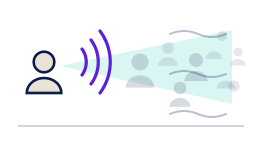
The most processing power, the most sophisticated handling of speech in noise, wind and reverberation, the widest set of automatic environments, and artificial intelligence that puts speech ahead of noise. Premium aids process sound through the most channels, usually 48, which improves sound quality, and they reduce listening effort in noisy places. Noise is everywhere: grocery stores, banks, a walk down the street. Premium is the level we recommend, and premium wearers report the most natural listening experience with hearing aids.
Recommendations are made in the clinic with the hearing instrument specialist after your hearing test.
Features
Hearing aid features that make a real difference

- Speech in noise processing. The single biggest quality of life feature. Ask how the aid separates a voice from background chatter. Artificial intelligence, on premium technology levels only, takes this further.
- Rechargeable batteries. Overnight charging, no tiny batteries to change. Now standard on most models.
- Bluetooth streaming. Calls, television and music straight to your ears. Check the brand works well with your phone, whether iPhone or Android.
- Directional microphones. Focus on the person in front of you and reduce sound from behind.
- Automatic programs. The aid recognizes the environment and adjusts itself.
- Tinnitus features. Built-in sound therapy for people who have ringing in the ears as well as hearing loss.
- Telecoil and Auracast. Telecoil connects to hearing loops in theatres, churches and service counters. Newer aids are also Auracast ready, the Bluetooth broadcast standard that is beginning to replace loops.
- App control. Adjust volume and programs from your phone, and in some brands let the clinic make remote adjustments.
Our method
How we make recommendations
Every appointment begins with a conversation about your lifestyle, the improvements you are hoping for, and your hearing health history. A comprehensive hearing test follows. Based on the results and a collaborative conversation, we select an appropriate style and technology level, and we can set up a complimentary in-office demo so you can immediately evaluate the benefits. Take-home trials are also an option when appropriate. Our recommendations are always based on your lifestyle, your needs and your listening challenges.

Good to know
Questions about picking the right hearing aid
What are the best hearing aids for seniors?
The best hearing aid for an older adult is usually one that is easy to handle: rechargeable, with a simple app or none at all, and in a style that suits their dexterity. Strong speech in noise performance matters too, for family gatherings. The specific model depends on the hearing test.
Are premium hearing aids worth it?
Yes. The manufacturers' research and development go into the premium level. Premium-level hearing aids address the most challenging listening situations, and their sound quality is the most natural. Premium-level technology is what we recommend. The fitting and follow-up care, which are highly dependent on the skill of the clinician, are equally important for successful outcomes with hearing aids.
Which brand is best?
Each of the six brands we carry has engineered sophisticated hearing aids, and each has a different sound character and set of strengths. The right brand is the one that sounds most natural to you and addresses your unique needs, which are discussed in detail at your hearing test appointment. See our brands page for how they differ.
How do I know which technology level I need?
A needs-based assessment is conducted with a case history; your challenges are discussed, and the appropriate technology level is recommended by the hearing instrument specialist.
Book
Hear the difference for yourself
Book a complimentary demo online. If you have not had your hearing tested recently, start there instead: the test is complimentary if you are 55 or over.