
Ear wax removal
Ear wax removal, three methods
Blocked, itchy or muffled ears? Our hearing instrument specialists remove ear wax safely and comfortably, using irrigation, gentle suction or manual removal, whichever is right for your ears.

Three removal methods in one clinic
Appointments usually within the week
Both ears checked and cleared in one visit
$95 per session, one ear or both

Why it happens
Why ear wax builds up
Ear wax is normal and useful. It traps dust, keeps the skin of your ear canal from drying out and usually works its way out on its own. Problems start when it builds faster than it clears. Narrow or curved ear canals, hearing aids and earbuds, hairy or dry canals, and a habit of using cotton swabs, all push wax deeper instead of out.
When wax fully blocks the canal, you may notice:
- Muffled or reduced hearing, often in one ear
- A blocked or full feeling
- Itching, or a dull ache
- Ringing or buzzing in the ear
- Dizziness in some cases
A blocked ear and a sudden hearing loss might feel similar from the inside, and neither you nor we can tell them apart without looking. If your hearing dropped suddenly, within hours or overnight, call us immediately for same-day care. Sudden hearing loss responds best to treatment started within the first 24 to 48 hours, and a hearing test is what gets you to that treatment quickly. If we are closed, go straight to the nearest emergency room. For wax that has built up gradually, book online. We check for wax at the start of every appointment, and if the problem is something else, we will tell you.
Our methods
Three ways we remove ear wax
Every visit starts with a look inside your ears with an otoscope. What we see decides the method. Some people need only one, and some need a combination.
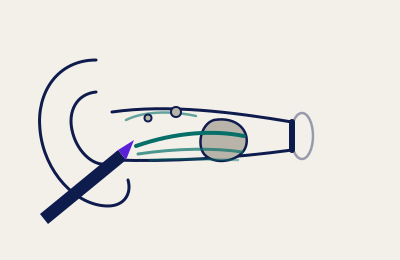
Irrigation
Irrigation, sometimes called ear syringing or ear flushing, uses a controlled stream of warm water to soften and float the wax out of the canal. It suits larger, softer build-ups and is the method most people picture when they think of ear cleaning. Modern irrigation systems control pressure and temperature, so it should feel like a gentle wash, not a jet.
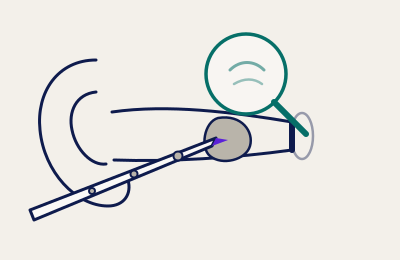
Suction
Suction, often called microsuction, uses a fine tube attached to a low-pressure suction unit to lift wax out while we watch the canal through magnification. There is no water involved, which makes it the better choice if you have a perforated eardrum, ear tubes, an ear infection or a history of ear surgery. It is quick and precise, and most people find it the most comfortable of the three.
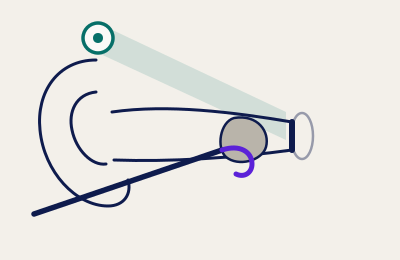
Manual removal
For firm or stubborn wax, or wax sitting near the eardrum, we remove it by hand with small, purpose-made instruments such as a curette or fine forceps. Manual removal is done under light and magnification and is often used alongside suction to finish the job.

Choosing
Which method suits your ears?
You do not need to decide in advance. The specialist looks first, then recommends. As a rough guide:
- Soft, recent build-up with a healthy eardrum: irrigation, or suction
- Perforated eardrum, ear tubes, recent infection or surgery: suction and manual removal only
- Hard, dry, impacted wax: manual removal, irrigation, or suction, sometimes after a few days of softening drops
- Hearing aid users: suction, because it is quick and leaves the canal dry, but when that’s not possible, then irrigation
If the wax is very hard, we may ask you to use softening drops for a few days first and come back. It makes the removal faster and more comfortable, and we will tell you what to use and for how long when you book.
Your appointment
What to expect at your appointment
We ask about your symptoms and any history of ear problems or surgery.
We look in both ears and explain what we see.
We remove the wax using the method that suits you. We book 30 minutes for every appointment, and it is often shorter, depending on the wax.
We look again to make sure the canal is clear and the eardrum is healthy.
If your hearing still seems reduced once the wax is gone, we can do a hearing test in the same visit. It is complimentary if you are 55 or over.
Aftercare
Safety and aftercare
Ear wax removal is a routine procedure when it is done by someone trained to do it. Please do not try to remove impacted wax at home with cotton swabs, hairpins or ear candles. Swabs push wax deeper, and ear candles do not work and can burn.
After your appointment, your ears may feel unusually open, and sounds may seem loud for a few hours. That settles quickly. If you had irrigation, keep the ear dry for the rest of the day. If you tend to build wax regularly, we can suggest a maintenance routine and a sensible interval for a check-up. Some people come every few months, some once a year.
Cost
How much does ear wax removal cost?
Ear wax removal at Hear & Co is $95 per session, whether we treat one ear or both, and that covers any combination of methods needed. Routine wax removal is not covered by OHIP, but many extended health plans reimburse it under paramedical or hearing services. We give you a receipt you can submit.

Where we are
Ear wax removal near you
Our clinic is at 7-1100 Golf Links Road in Ancaster. We see people from all over, including Hamilton, Dundas, Stoney Creek, Waterdown and the Mountain, as well as Burlington, Brantford and Caledonia. Free parking at the door and a ground-floor entrance make it an easy visit.
Good to know
Common ear wax removal questions
Is ear wax removal covered by OHIP?
Not at a private clinic. OHIP does not cover routine ear wax removal, which is why family doctors often refer people to a hearing clinic. Many workplace and private health plans reimburse the fee, so keep your receipt.
How much does ear wax removal cost in Ontario?
Prices vary by clinic. At Hear & Co, the fee is $95 per session, whether we treat one ear or both.
Does ear wax removal hurt?
It should not. You may feel pressure, hear the suction, or feel water moving during irrigation, and that is normal. If anything is uncomfortable, tell us, and we will stop and adjust.
How do I know if it is wax or hearing loss?
You often cannot tell from the inside, and the only way to know is to have someone look. If it is not wax, we can do a hearing test the same day and give you an answer. If your hearing dropped suddenly, within hours or overnight, call us the same day or go to an emergency room: treatment works best within the first 24 to 48 hours.
Can I have wax removed if I wear hearing aids?
Yes, and it is one of the most common reasons hearing aid users visit. Wax is the number one cause of a hearing aid that suddenly sounds weak or dead. Bring your hearing aids with you and we will check them too.
Do I need a referral?
No. Book directly online or by phone.
Book
Book your ear wax removal online
Same week appointments are usually available. Book online, call 289-246-8005 or email info@hearco.ca.