
Types of hearing aids
Types of hearing aids
Hearing aids come in six main styles, named for where they sit on or in your ear. The style affects how visible they are, how powerful, and how easy they are to handle. Here is each one explained, and how to choose between them.

Independent, not tied to one manufacturer
Complimentary hearing tests for anyone 55+
Complimentary hearing aid demos
State of the art equipment
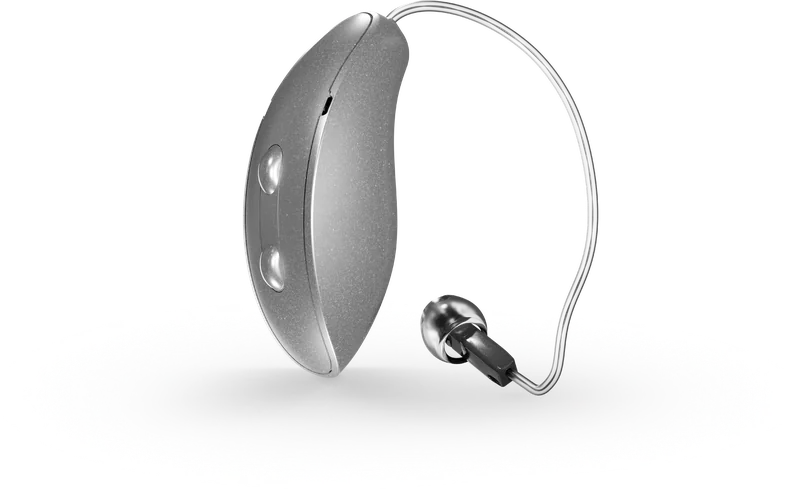
Style one of 6
Receiver in canal (RIC)
This is the style most people are fitted with now. A small case sits behind the ear, and a thin, almost invisible wire carries sound to a tiny speaker (the receiver) placed in your ear canal, held by a soft dome or a custom tip.
- Best for: mild to severe hearing loss, most adults, first-time wearers
- Visibility: low; the case hides behind the ear and the wire is hard to see as it is flush with your ear
- Power: mild to severe hearing losses are addressed through various receiver strengths
- Handling: easy; rechargeable models do not require a battery change
- Features: room for everything: Bluetooth, rechargeable, directional microphones, app control
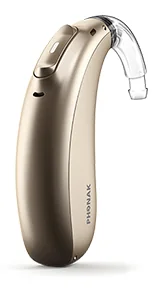
Style two of 6
Behind the ear (BTE)
The whole hearing aid sits behind the ear, and a clear tube carries sound to a custom earmould or a thin tube tip in the canal. BTEs are the workhorses: the most powerful, the most robust and the easiest to handle.
- Best for: moderate to profound hearing loss, people who want maximum power or the simplest handling, anyone with a lot of wax or a moist ear canal
- Visibility: moderate; larger than a RIC, though modern BTEs are much smaller than they used to be
- Power: the strongest available
- Handling: the easiest; larger controls, and rechargeable on many models
- Features: everything, including telecoil and the largest rechargeable batteries
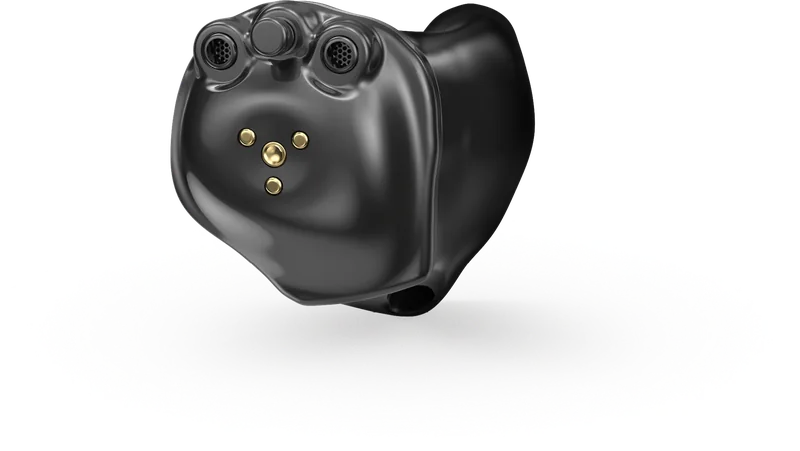
Style three of 6
In the canal (ITC)
A custom shell moulded to your ear sits in the outer part of the canal, with a small portion visible at the opening. Nothing sits behind the ear, which some people prefer with glasses or masks.
- Best for: mild to moderately severe loss, people who want a custom fit with room for controls
- Visibility: low to moderate; partly visible at the ear opening, usually in a skin tone shell
- Power: moderate
- Handling: easy to insert as a single piece; room for a volume control or program button
- Features: Bluetooth and rechargeable available on many models
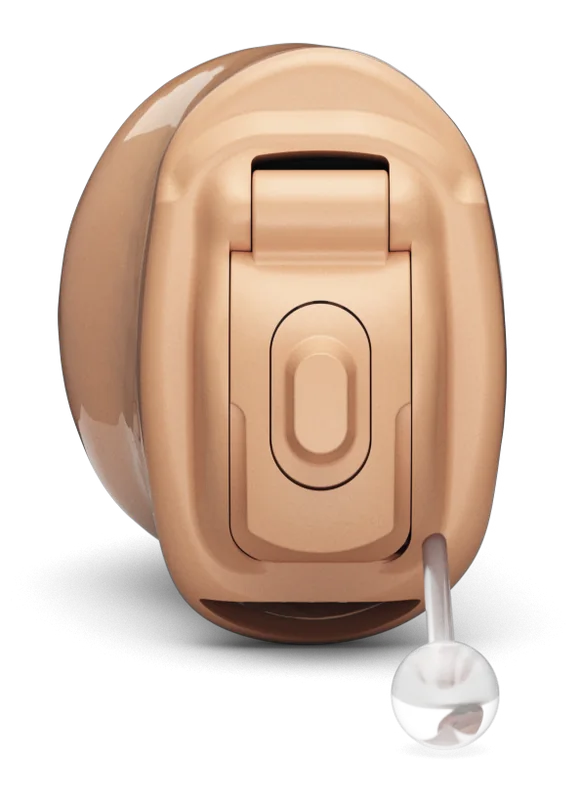
Style four of 6
Completely in canal (CIC)
The smallest custom style. The aid sits deep in the canal and is nearly invisible from the outside, removed with a tiny pull cord. Often what people picture when they search for invisible hearing aids.
- Best for: mild to moderate loss, people for whom discretion is the priority
- Visibility: the lowest of the six
- Power: limited by size; not suited to severe loss
- Handling: needs good dexterity; the CIC models we fit are rechargeable
- Features: the fewest; usually no Bluetooth, no directional microphones, no controls
Style five of 6
Instant fit CIC
A ready-made, completely in-canal aid, such as Signia's Silk, that fits most ear canals without an impression while maintaining the discretion of a custom CIC.
- Best for: mild to moderate loss, people who want a discreet aid without waiting for a custom shell
- Visibility: very low
- Power: limited by size; not suited to severe loss
- Handling: easy to insert; rechargeable models available
- Keep in mind: a soft sleeve replaces the custom shell, so the fit is checked at your appointment
Style six of 6
Earbud style
A modern, rechargeable in-the-ear aid that looks like a wireless earbud, such as Signia's Active. Designed for people who want current technology and a contemporary look rather than a medical one.
- Best for: mild to moderate loss, first-time wearers who want something they are happy to be seen in
- Visibility: visible, but reads as an earbud rather than a hearing aid
- Power: suited to mild to moderate loss
- Handling: easy; charges in a case like earbuds, Bluetooth and app control
At a glance
Which hearing aid style is right for you?
As a quick guide:
- Most people: RIC. Discreet, powerful enough for most losses, all the features.
- Severe or profound loss, or a wax-prone ear: BTE.
- Nothing behind the ear, room for a button: ITC.
- Discretion above all, mild to moderate loss, steady hands: CIC.
- Discretion without waiting for a custom shell: instant fit CIC.
- Modern and trendy: earbud style.
Your hearing test result, ear canal shape and dexterity narrow the choice further, and a demo helps determine the final decision. We take custom impressions in the clinic for ITC, CIC and BTE earmoulds.
Inside any style
Features to look for in any style
Style is the shape. Technology is what happens inside, and most of it is available in more than one style.
Rechargeable hearing aids

Charge overnight in a case, like earbuds. No batteries to buy or change, which makes a difference for anyone with stiff fingers or poor eyesight. Standard on most RIC, BTE and many ITC models, and available in the CIC models we fit.
Bluetooth hearing aids

Stream phone calls, video calls, television and music directly to both ears. Most current RIC and BTE models, and many ITC models, connect to iPhone and Android. We check the brand's compatibility with your specific phone during the demo.
Invisible hearing aids
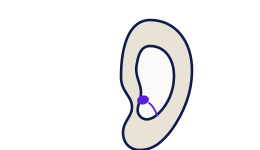
CIC and the even smaller invisible in-canal (IIC) styles are the closest to invisible. Discretion comes at the cost of power and features, making them more suitable for mild to moderate loss. A RIC with a thin wire is a good compromise for many people who want discretion without the trade-offs.
Directional microphones and automatic programs

Available on RIC, BTE and larger custom aids. These are what make the difference in restaurants and groups.
Good to know
Common questions about hearing aid type & style
Which type of hearing aid is most commonly fitted?
Receiver in canal (RIC). It balances discretion, power and features, and suits the widest range of hearing loss.
Which hearing aid is the least visible?
Completely in canal (CIC) and invisible in canal (IIC) styles. They suit mild to moderate loss and need good dexterity.
Can I get a rechargeable in-the-ear hearing aid?
Yes. Many ITC models are rechargeable, and the CIC models we fit are rechargeable too.
Which type is best for severe hearing loss?
Behind the ear (BTE), or a RIC with a high power receiver. Both options are discussed after the hearing test and a conversation.
Do I need a custom mould?
Custom moulds are required for ITC, CIC and most BTE fittings. We take the impression in the clinic. RICs usually use a standard soft dome, with custom tips as an option.
Book
See and hear for yourself in our clinic
The quickest way to choose a style is to hold them and hear them. Book a complimentary demo online, or start with a hearing test, which is complimentary if you are 55 or over.